

Who pays for Australia’s data centre boom – and who benefits?
AI is driving billions into Australian data centres, but power delays and new rules are testing how much of the investment can be delivered – and who benefits
Australia’s data centre boom is attracting billions in investment and promises to expand the computing power available for AI. Whether the buildout benefits Australia will depend on who can use that capacity, who owns the hardware inside the data centres, where the profits from selling compute go, and who pays for the energy and infrastructure it requires.
Commonwealth Bank estimates that AI, cloud services and the wider digital economy could drive a $150 billion data centre investment cycle by 2030, with about 6 gigawatts of potential capacity in development – around four times the amount operating at the end of 2025.
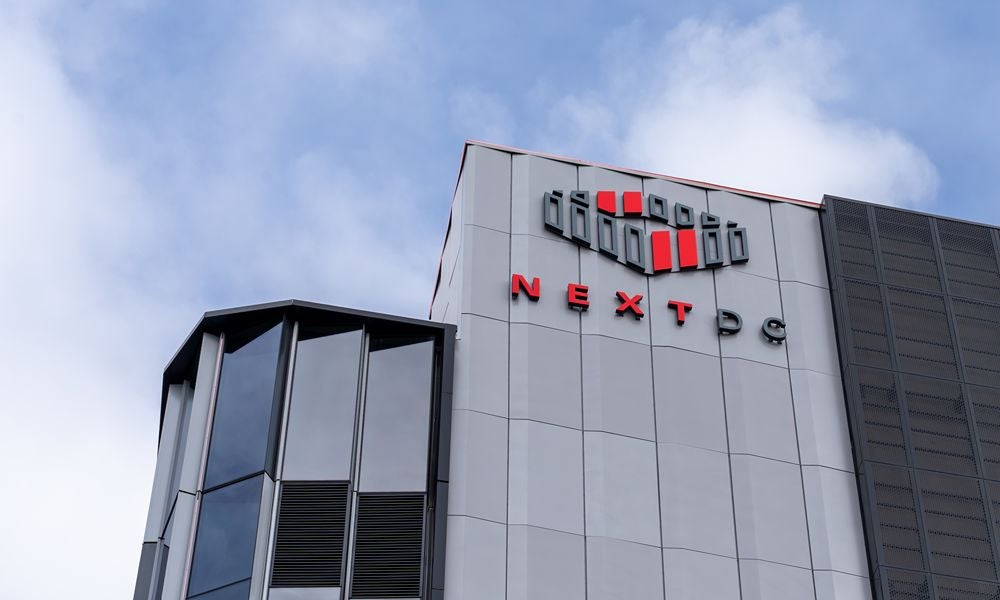
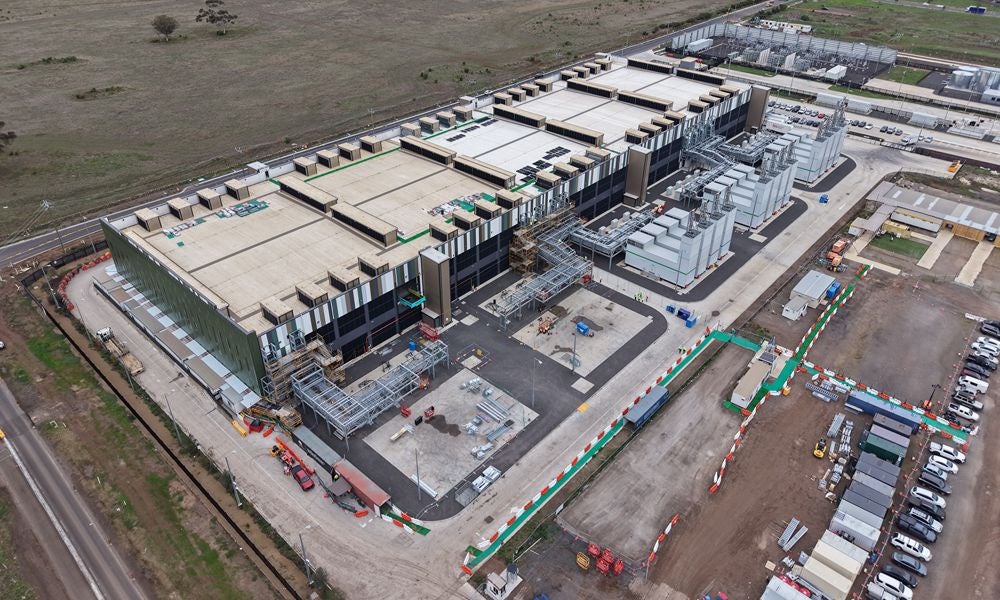
The boom is already running into planning and power constraints. In September, Goodman Group withdrew its proposed $1.2 billion Project Mars data centre in Sydney, citing policy changes and community feedback. In October, grid delays pushed back the next increase in power to NEXTDC’s M3 Melbourne centre until FY28, prompting the company to cut its FY27 revenue guidance.
And AI data centre company Firmus withdrew its planned ASX float last month after weak investor demand and concerns about its valuation and debt, saying it would pursue private funding.
Victoria has also moved to require new data centres to bring their own renewable energy and storage, pay for network upgrades, and stay out of residential zones.
Much of the debate centres on whether data centre investment will bring the additional energy and grid capacity needed to support it. “The economic opportunity is real, but the energy question is not simply how much electricity data centres use,” said Katja Ignatieva, an Associate Professor in the School of Risk and Actuarial Studies at UNSW Business School. “It is whether new facilities bring enough additional firm supply, flexibility and network funding to prevent their private investment from creating public costs.”
Despite the pace of investment and the controversy it has drawn, UNSW AI Institute Director Dr Sue Keay sees a different risk: that Australia fails to secure sufficient computing power. Demand for the country’s existing research computing infrastructure is already more than three times the available capacity; even that may understate the shortage.
Learn more: What AI data centres mean for Australia’s power and water
“We think that those signals are actually blunted, because people have given up trying to get access to that level of compute in Australia,” Dr Keay said. “They are often travelling to places like Switzerland to get access to 10,000-scale GPU clusters, which we don’t have access to here. The bigger risk is that our researchers leave Australia because they don’t get access to that compute.”
Australia could therefore see an enormous expansion in commercial data centres and still remain short of the specialised computing power needed locally. “We could very well have all of this infrastructure built in Australia but not accessible to Australians, and that is a big policy question,” Dr Keay said.
When more capacity is not enough
AI is changing the type of infrastructure required inside data centres. Training and running advanced models depend on dense clusters of the latest graphical processing units (GPUs), with corresponding demands for cooling, storage and high-speed connectivity.
Dr Keay argues that much of the current infrastructure in Australia is not well suited to some of the specialist functions needed for AI.

“The idea is that potentially Australia will house AI infrastructure for AI model training, but I don’t believe that’s happening at scale at the moment; it’s mainly being used for inference,” she said. “But, for a lot of our research and startups, and for companies that are looking to develop their own AI models, that is an important consideration – you do need to have a balance.”
The development pipeline is far larger than the amount of capacity likely to be built. A/Prof. Ignatieva noted that in New South Wales, data centre connection requests totalled 28 gigawatts as of July 2026, well above the state’s typical average demand of 7.5–10 gigawatts. But the NSW government estimates six of every seven megawatts requested may be “phantom” demand, while utilities expect only about 20% of applications to proceed.
“These requests should not be treated as forecasts: some may be staged, duplicated or may not proceed,” A/Prof. Ignatieva said. “Nevertheless, they show the scale of the planning challenge.”
How much of that capacity proceeds is only part of the question; the infrastructure must also be suitable for the work Australia hopes to support.
"The problem arises when data centres connect to the grid before the extra power supply they need is available"
KATJA IGNATIEVA
“If we only get access to outdated technology that is not aggregated, that is just isolated in various different facilities, it is actually of no use,” Dr Keay said. “Similarly, if we are just offered tokens – tokens are a customer acquisition strategy, and that is not going to work to allow us to do the large-scale AI model development that is necessary here in Australia.”
The government will need to be clear about what kind of capacity Australia needs – and what it expects private developers to provide.
Hosting infrastructure is not sovereign capability
Who owns and controls the infrastructure will shape what Australia gains. Many of the world’s largest AI developers and cloud providers are based in the US, leaving Australia with little leverage over those companies and no control over the laws that govern them.
“The US Cloud Act makes very clear that just because you house infrastructure on your shores does not mean that foreign governments are not able to access your data, which is problematic,” Dr Keay said. “Ideally, we would have a balance of some of this foreign investment with a lot of homegrown domestic capability.”
She pointed to Australian data centre operators, including NEXTDC and CDC Data Centres, as well as homegrown AI cloud providers such as Reset Data and Sharon AI. Supporting domestic providers would allow Australian companies to capture more of the returns and reduce their exposure to foreign jurisdiction.
Subscribe to BusinessThink for the latest research, analysis and insights from UNSW Business School
But ownership is only part of the issue. Dr Keay argues that private capital is no substitute for public investment in infrastructure serving Australia’s research and strategic needs. “At the moment, the indications from the federal government are that they think the level of foreign investment into AI and data centres in Australia means there is actually no need for public investment,” she said. “But we haven’t seen that work in other parts of the world, where there tend to be more public-private partnership arrangements.”
Australia has not upgraded its supercomputing facilities for a decade, she said. That limits scientific discovery, makes it harder to attract AI talent and leaves Australia less able to develop its own systems or monitor and regulate imported AI.
“And, of course, the long-term promise of artificial intelligence is things like personalised medicine and personalised education, and if Australia doesn’t own any piece of that, then many other countries will benefit from it – but Australia will not,” Dr Keay said. “Or, if we do, it will be owned by foreign companies that we are then constantly paying rent to.”
Power will determine what gets built
Data centres pose an unusual challenge for the electricity system. They run around the clock, require reliable and redundant power, and cluster in a small number of locations, creating local bottlenecks even when supply is available elsewhere.
The Australian Energy Market Operator expects data centres’ share of National Electricity Market demand to rise from about 2% today to almost 10% by 2050. That steady demand could support the energy transition. Data centre operators can offer renewable-energy and storage projects the long contracts and dependable customers needed to attract finance.

“Data centres are unusually strong counterparties for new clean-energy projects because many operators have investment-grade credit, predictable demand and long investment horizons,” A/Prof. Ignatieva said. “A 10-to-20-year contract can give a wind, solar or storage project the revenue certainty needed to reach financial close.”
The benefit depends on when and where additional supply becomes available. Annual renewable-energy purchases may match total consumption without providing reliable power during evening peaks or periods of low wind and solar output, or relieving constraints at a facility's connection point.
“A solar contract in one region will not solve an evening network constraint elsewhere,” A/Prof. Ignatieva said. “The problem arises when data centres connect to the grid before the extra power supply they need is available.”
Modelling commissioned by the Clean Energy Finance Corporation found that, without additional renewables and storage, data centre growth could raise wholesale electricity prices by 26% in NSW and 23% in Victoria by 2035, while increasing National Electricity Market emissions by 14%. Adding 3.2 gigawatts of renewable generation cut the price increases to 7% and 6%, respectively, with 1.9 gigawatts of four-hour battery storage reducing them further.
“These are scenario results rather than forecasts, and the modelling used 2024 planning assumptions, but the direction is economically intuitive: new demand that competes for existing scarce supply raises prices; new demand accompanied by firm supply need not,” A/Prof. Ignatieva said.
Learn more: David Tudehope on Australia’s role in the AI value chain
Location is also important: facilities near spare grid capacity, unused renewable generation or former power stations may be easier to support than development in congested parts of Sydney and Melbourne.
Delayed grid connections can also hold up tenant income while construction and financing costs continue. “A project may look attractive based on its average power price but become much more expensive once the cost of reliable evening power, grid upgrades and backup systems is included,” A/Prof. Ignatieva said.
Making developers pay their way
The question is how those costs should be allocated. State and federal proposals are moving towards a “causer pays” approach, under which large data centres would contribute to the energy and network infrastructure needed to support them.
In March, the Australian government set out expectations for new data centres, including securing additional clean generation or storage, covering their share of transmission and distribution costs, and supporting demand flexibility. The Commonwealth also recently held a consultation on proposed national AI standards for large data centres, with proposals including requirements on energy, water, costs to consumers and communities, location, and community engagement. The Australian Energy Market Commission has also recommended energy obligations for large data centres.
“The economic principle is straightforward: a project should pay for its direct connection, the attributable upstream augmentation it triggers, and the stranding risk created when network capacity is reserved but not used,” A/Prof. Ignatieva said. “Existing customers should not be expected to finance connection capacity that may never ramp up.”
"Australia needs a consistent national approach, with rules that reflect local grid conditions”
KATJA IGNATIEVA
Proposals in NSW include entry bonds to discourage speculative applications, minimum network payments, take-or-pay commitments and fees for major network upgrades. “If designed well, a ‘causer pays’ approach protects consumers and shows developers the real cost of connecting in a particular location,” A/Prof. Ignatieva said. “If designed badly, it could become an unclear extra tax that increases investment uncertainty without improving the grid.”
Dr Keay believes developers should go further than meeting the immediate energy and water requirements of their own facilities. “They also need to be meaningfully contributing to the infrastructure that makes up our grid and, if at all possible, providing net positive impact on both energy and water,” she said.
A national approach is needed because decisions made by one state or council can affect the wider electricity grid. Otherwise, governments may end up competing for investment while leaving others to bear some of the costs. “These things will have national impact, and those decisions shouldn’t be made at the local level,” Dr Keay said.
The deal Australia needs
The challenge is to set national rules, even if individual projects are approved and connected at the state or local level. “Australia needs a consistent national approach, with rules that reflect local grid conditions,” A/Prof. Ignatieva said. “It should avoid both competing state incentives and blanket bans on new data centres.”
States and network businesses could also identify where grid capacity, water and renewable resources are available, giving developers clearer signals about suitable locations before they commit to a site.
Dr Keay also sees an opportunity for Australia to supply renewable-powered computing capacity to countries in the region that face energy constraints. “There are a number of good opportunities for Australia, if we are able to design the data centre buildout in a way that is beneficial both to Australia and to our neighbours,” she said.
But the scale of investment alone will not determine the result. “The $150 billion investment figure should not be treated as the same as a $150 billion benefit to the Australian economy,” A/Prof. Ignatieva said, noting that much of the equipment, including servers and networking hardware, is imported.
The terms Australia secures from private developers will shape how much of the value remains here. “Actually knowing what to ask for is probably the key to making sure we don’t end up losing out on this opportunity – or finding out that the opportunity isn’t actually beneficial to Australia at all,” Dr Keay said.
Five recommendations for industry professionals
- Align private infrastructure investments with local grid capacity and transparent community engagement to avoid costly planning delays and public backlash.
- Establish rigorous clean energy procurement commitments, such as long-term contracts for wind, solar, and battery storage, that support firm renewable supply rather than straining existing networks.
- Partner with academic institutions and domestic providers to bolster local sovereign capability, data security, and research access to specialised high-performance computing clusters.
- Factor full connection expenses, upstream network upgrades, and evening peak power reliability into early financial modelling to prevent unexpected project cost overruns.
- Target regional locations near spare grid capacity, unused renewable generation, or former power stations rather than congested metropolitan zones to accelerate deployment timelines.