

While AI cuts startup headcount, investors still want to back a team
Download The Business Of podcast on your favourite podcast platform.
While AI helps startup founders achieve more, UNSW's Director of Entrepreneurship, David Burt, says investors still want a team behind any one-person unicorn
OpenAI chief executive Sam Altman made headlines with his prediction that a one-person company worth a billion dollars is coming, something he said "would have been unimaginable without AI and now will happen.”
However, the reality is somewhat different and more nuanced, according to David Burt, Director of Entrepreneurship at UNSW Sydney. “Not realistic, but fun to talk about,” said Burt, who was recently interviewed by Professor of Practice Fahim Khondaker for The Business Of, a UNSW Business School podcast.
“What I mean by that is the idea that a single person with no other human help is going to create a company worth a billion dollars or more. I don't think that has happened yet. I don't think that's going to happen anytime soon.”
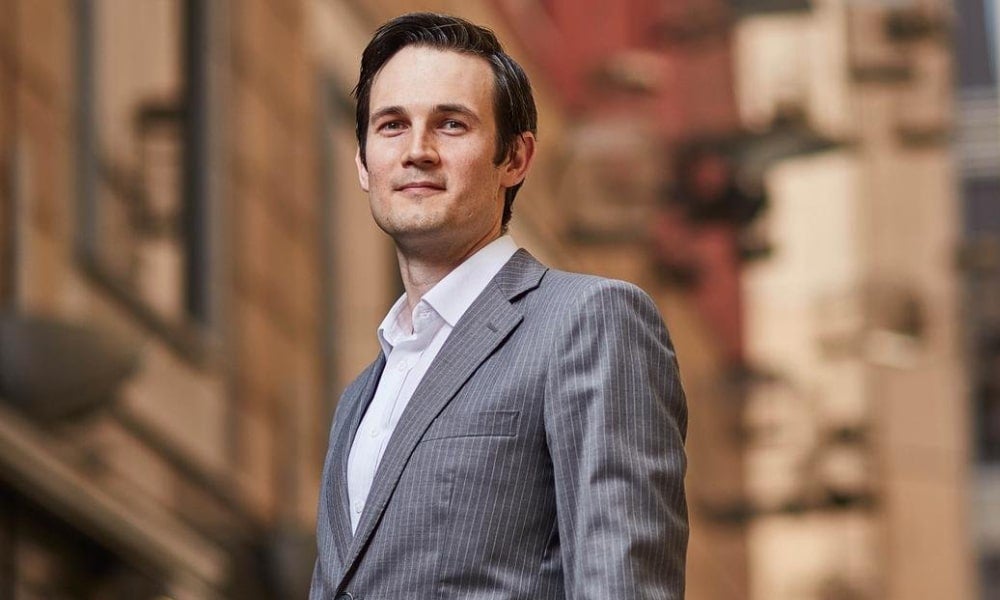
Burt speaks from experience. As the head of UNSW Founders, whose UNSW student startups have raised over $270 million in post-program funding and generated over $1 billion in enterprise value since graduating, Burt has worked with thousands of budding and established entrepreneurs. Each year, about 10,000 people approach his team for advice and assistance, and about 100 startups are launched as a result.
He spoke about global trends and noted that solo founders have risen from about 5% to almost 20% in the latest investment round at the startup accelerator Y Combinator. Despite this, Burt said that a billion-dollar company run by a single founder is unlikely to appear soon – and investors do not necessarily want one.
How realistic is the one-person unicorn?
Most people have no idea what one person can now achieve with AI, according to Burt. "What I can tell you is that for each stage of the company, you need about a third of the humans,” he said.
“So, if you take a normal software company, maybe they have a few million dollars in revenue. They might have raised $10 or $20 million of venture capital. That company, pre these technologies, needed about 20 humans. Now you need about five."
Burt told Prof. Khondaker that investors also look closely at the team behind a startup. "You still need a couple of other humans,” he said. “No one human can take responsibility for everything, especially if you're taking on investment cash. As an investor, it's pretty risky if you're worth a billion dollars and it's just you. You might get hit by a bus. You're still mortal, and so investors actually don't want a one-person unicorn."
Learn more: Leaders: Rethink your workflows before you add AI into the mix
Burt searched for a company worth more than a billion dollars, created in the past 20 years, with no investment capital, and found none. He says that does not mean none exist, but fast growth usually involves investor support and money.
For startups in which staff say they are at capacity and ask for more employees to be hired, Burt said, "Smart business owners and founders today are like, ‘Well, maybe we should do that, but let's give AI a go first.'" There is no standard approach for this yet, he says – but the best startup founders are running lots of experiments, and investors mostly want to see usage and growth increase accordingly.
Has AI changed the nature of startups?
AI has changed what one person can accomplish in a startup, Burt observed. "Every single thing that needs to get done is on that person, and that was true before AI, and that's true after AI,” he said.
“What's changed is their level of ambition, of how much they can take responsibility for. So, whether you're a startup founder, whether you're a doctor, whether you're a teacher, whether you're an accountant or a plumber, what you can take responsibility for if you adopt the tools is astoundingly larger than you think. Now, there are some consequences that come with that: the cognitive load on people goes up, so the stress and pressure you're under can rise as well."
He recalled two recent conversations to illustrate. One founder had an idea for distributed physical autonomy, such as 1000 drones or robots interacting in a warehouse. The founder spent about six months on the related mathematics and algorithms and published papers in a research journal.
"What I can tell you is that for each stage of the company, you need about a third of the humans"
DAVID BURT
Before AI, that might have been enough to start conversations with government, business and military organisations about funding the next step. But the space for those conversations is now crowded, according to Burt, who asked the founder for the cheapest way to demonstrate the algorithm working on off-the-shelf drones or robots. AI, he says, has "really compressed the time to show, whether that's physical or digital."
He also gave the example of Miles, a game designer. Burt asked how long it would have taken a single person to build a proof of concept before AI, and Miles responded that it would have taken 12-18 months. With the right AI tools, however, it took him about 6-8 weeks. (Miles still needs to pitch for financing, then build a small team of experts to execute the game).
Where startups should target low-hanging fruit
For founders looking for somewhere to start, Burt sees the most opportunity in the creative economy – if people can get over the "emotional friction" of using AI. Some people reject AI, but he says every technology has met the same response.
When photography arrived, for example, newspapers and academics predicted it would kill art, since fewer people would be needed to paint realistic images. In reality, Burt said entire domains of art were created as a result (such as Impressionism) because a camera could show reality, but could not take an impressionist image.

New technology brings "this extra layer of emotion, fear, and disruption" in the creative industries, he says, but "anyone who can get past that, and just think, great, how can I use these to create delightful experiences for other humans? They're going to have a really good time."
Startup founders face less of that resistance than most, because Burt has seen that anyone with the ambition to start a company needs "a pretty high tolerance for shame, attracting criticism, being told no, and being told you're crazy."
He gave the example of Breaker, a distributed physical autonomy software company founded by three recent UNSW engineering graduates with an idea. "Literally everyone else laughed at them," said Burt. They initially struggled to raise venture capital, but UNSW became their first angel investor. The company has since raised millions of dollars in investment capital and has generated millions more in revenue.
In a market economy such as Australia's, Burt has observed that some people will enthusiastically adopt AI and outcompete others. "Even if it feels a little uncomfortable or it's hard to learn, dive in and start integrating it into whatever your practice is, whether you're a startup founder or not,” he recommended. “Because if you don't, someone else in your profession will, and eventually, that's not going to be a good outcome for you."
How much of a threat is a startup to an existing business?
Burt said the startup ecosystem is the perfect place to test a business idea and see if it will fly – potentially with the assistance of AI. "The reason a startup is a great vehicle to do something new is that it's not worth anything,” he said.
“If you get it wrong, you've lost nothing, just your time. The reason large businesses find it hard to innovate is that they have real assets at stake. And if they make a mistake, there's a high chance they'll destroy value."
Subscribe to BusinessThink for the latest research, analysis and insights from UNSW Business School
Publicly listed companies have more to lose, as Burt explained that some mistakes can potentially lead to a shareholder lawsuit. For anyone leading a large business, he said, the cultural change needed to integrate AI is the most important task. "The worst thing you can do is go to your team or employees and say, 'Everyone has to use AI now.' You're guaranteed to get a bunch of friction and sadness,” he said.
“A good culture means people turn up to work on the organisation's mission, and leaders can ask them: ‘Hey, there's been a whole bunch of new technology invented. How might we use this to better achieve our mission?’" Giving people permission to be creative and experiment puts leaders on a more productive path than a non-negotiable mandate, he said.
Key takeaways for business leaders
Burt concluded with a number of recommendations for startups and established businesses alike. Before hiring new staff, he suggested trying AI to see how many tasks it can realistically take on (that might otherwise be performed by a human being). While hiring a new team member may eventually be the right choice, he recommended running an AI experiment first.
It is also important to hold a person accountable wherever harm or risk is involved. A “human in the loop” helps identify tasks that may involve harm or risk. Similarly, Burt recommended watching for increased cognitive load that people might experience as they take on more responsibility. This is a cost that he says few people discuss.
"The worst thing you can do is go to your team or employees and say, 'Everyone has to use AI now.' You're guaranteed to get a bunch of friction and sadness”
DAVID BURT
Lastly, he suggested asking how AI can serve your organisation's mission and giving staff permission to experiment. Burt's top tip is to check how much time you spend learning and practising with AI. "How much time are you spending learning, being creative, being curious, and practising integrating AI into some part of your life? It could be at work, it could be a hobby. If you're spending a few hours a week doing that, you're much more likely to benefit from what happens next,” he concluded.
Five AI recommendations for startup founders
- Before deciding to hire a new employee, choose a task that is stretching the team and test whether AI can take on some of that work
- For tasks that could cause harm or pose a risk, assign a person to verify the result and make the final decision.
- Ask staff how AI could help the organisation meet its mission, then give them room to test ideas and share what they learn.
- Monitor how AI changes staff workload over time, as taking on more tasks can increase cognitive load and stress.
- Set aside a few hours each week for staff to learn AI tools and practise using them at work or outside work.